01 · FROM THE PLAIN TO THE TABLE
Chengdu’s food history began with abundance, movement and city life
Long before red chilli oil became the image of Sichuan food, Chengdu was already a city shaped by eating. The irrigated Chengdu Plain supported grain, vegetables, livestock and freshwater produce; markets brought those ingredients into the city; cooks learned to preserve seasonal abundance through pickling, salting, drying and fermentation. Chengdu cuisine grew from this relationship between a productive plain and a city with a large appetite.
The landscape supplied more than chilli
Dujiangyan’s irrigation network helped sustain the Chengdu Plain and its agricultural variety. Rice, vegetables, beans, meat, fish and seasonal produce gave cooks many textures and ingredients to work with. This material abundance is the foundation of Chengdu food.
Sichuan already valued fragrance and pungency
Chilli came from the Americas and entered Sichuan cooking much later. Earlier local tastes relied on Sichuan pepper, ginger, garlic and other aromatics. The older idea of xinxiang—pungency and fragrance—should not be confused with today’s chilli heat.
The modern flavour system was assembled over time
Successive migrations brought people and cooking habits from other parts of China into Sichuan. Chilli was gradually combined with local Sichuan pepper and with fermented broad-bean paste, preserved vegetables, soy sauce, vinegar and cooking oils. The result was not one “spicy” taste, but a flexible system of layered flavours.
The city turned cooking into public culture
By the late Qing period, records of Chengdu describe a developed world of restaurants, specialist food shops, teahouses and street vendors. Food belonged to public life: people met over tea, ordered small bowls from specialist shops and shared cooked dishes around a table.
Workers, students and neighbourhoods kept creating new forms
Modern Chengdu’s everyday food was never just hotpot (火锅). Noodle shops served quick bowls such as sujiao zajiang mian (素椒杂酱面; dry noodles with chilli oil and minced-pork sauce); small restaurants offered rice with home-style dishes; and street stalls sold snacks between meals. Hotpot grew into a sociable, longer meal, while chuanchuan (串串香) made hotpot-like flavours easier to buy in small, pay-by-the-skewer portions. These formats answered different needs for time, appetite, company and budget.
This history explains why Chengdu food cannot be reduced to heat. Its identity also lies in choosing ingredients by season, using every useful part, controlling texture, preserving food, building compound seasonings and matching a meal to the people around the table.
02 · WHY CHENGDU MATTERS
A centre of Sichuan cuisine—and a city that lives through food
Sichuan culinary techniques entered China’s national intangible cultural heritage list in 2021. Chengdu joined the UNESCO Creative Cities Network as a City of Gastronomy in 2010. Those titles matter because the food is not isolated from daily life: agriculture, markets, specialist kitchens, teahouses, neighbourhood streets and shared tables form one cultural landscape.
Mapo tofu · 麻婆豆腐
The Chen Mapo brand dates its story to 1862, at Chen Xingsheng, a small eatery by Wanfu Bridge on Chengdu’s north side. Its account says oil porters bought tofu and asked the owner’s wife, Chen, to cook it with some of their clear rapeseed oil. Her hot, fragrant tofu became popular; diners called her “Mapo”—a nickname linked to the pockmarks on her face—and the name came to describe both the dish and the shop. By the late Qing, Chen Mapo was recorded among Chengdu’s notable food businesses. The dish’s lasting appeal is in its contrasts: soft tofu, savoury crisp beef, fermented bean seasonings, chilli and Sichuan pepper. The precise family anecdote comes from the brand’s history; its place in Chengdu’s food culture is also reflected in local records.
Chuanchuan · 串串香
Local histories and recollections commonly trace Chengdu chuanchuan (串串香) to street stalls in the early-to-mid 1980s. Skewered ingredients could be chosen in small quantities and charged by the stick, making this hotpot-like meal accessible to passers-by on limited budgets. The date is a commonly cited account, rather than a precisely documented single point of origin.
Familiar Sichuan dishes have different local stories
Dan dan noodles (担担面), kung pao chicken (宫保鸡丁) and twice-cooked pork (回锅肉) are widely recognised Sichuan dishes, but their histories and links to Chengdu differ. In everyday Chengdu noodle shops, sujiao zajiang mian (素椒杂酱面; dry noodles with chilli oil and minced-pork sauce) is a common local choice. A dish can represent Sichuan cuisine without being a Chengdu invention.
How Sichuan’s spicy hotpot took shape · 四川麻辣火锅的形成
There is no settled single birthplace for Sichuan-style spicy hotpot. Accounts point to boatmen at Luzhou’s Xiaomi Shoal, salt workers in Zigong, or river-port workers in Chongqing. These stories share a setting—working people cooking inexpensive ingredients over a portable fire—while Chongqing’s later beef-offal stalls helped establish the mala hotpot known today. Chengdu developed its own local hotpot traditions within this connected region.
03 · READ THE FLAVOUR
Ma and la are different—and red does not tell the whole story
Numbing and aromatic
Sichuan pepper creates fragrance, tingling and a numbing sensation.
Chilli heat
Fresh, dried, pickled or oil-infused chillies can produce different kinds of heat and aroma.
Sichuan cooking builds compound flavours from salt, sweetness, sourness, chilli, Sichuan pepper, fermented pastes, preserved vegetables, ginger, garlic and aromatics. A red dish may be gentler than expected; a brown sauce may still contain chilli. One meal can combine hot, numbing, savoury, sweet-sour, fermented and relatively mild dishes.
Wēilà (微辣) means mild on that restaurant’s scale. Ask whether the dish is already made with chilli or Sichuan pepper before it reaches the wok; some signature broths and sauces cannot be adjusted meaningfully at the table.
04 · FOOD ALLERGIES AND DIETARY SAFETY
Shared pots and complex sauces need more than a translation
No guide can certify a dish or restaurant as allergen-free. Recipes vary, and ingredients may share oil, broth, knives, boards, strainers, tongs and condiment containers. Severe allergies require advance communication, a personal emergency plan and a willingness not to eat when staff cannot confirm the answer.
Cold dishes, noodles, snacks, sauces and garnish.
Sesame oil, paste, seeds and dipping sauces.
Tofu, soy products, soy sauce and compound seasoning.
Noodles, wrappers, batter and some soy sauces.
Some wrappers, batters, fillings and baked snacks.
Broths, seafood, oyster sauce and shared equipment.
- A divided hotpot is not allergen isolation.The two broths may still share preparation space, utensils and splashes.
- “Vegetable” does not necessarily mean vegetarian.Broth, lard, minced meat, oyster sauce or shared cookware may still be involved.
- Removing a visible ingredient may not remove the risk.Sauce, marinade and cross-contact can remain.
- Chilli intolerance is not the same as food allergy.Explain a severe allergy as a medical risk, not a preference.
SHOW THIS TO STAFF
I have a severe allergy to ______. This is not a preference or a mild intolerance. Please check the dish, broth, sauces and cooking oil, and avoid shared pots, oil, knives, cutting boards and utensils. If this cannot be guaranteed, please tell me clearly.
我对 ______ 严重过敏。这不是口味偏好或普通忌口。请确认菜品、汤底、酱料和食用油均不含 ______,并避免共用锅、油、刀具、砧板和餐具。如果不能保证,请直接告诉我。
This card helps communication; it does not prove that a kitchen can provide an allergen-free meal.05 · CHOOSE THE MEAL FORMAT
Start with your group, time and tolerance—not a “must-eat” list
| Your situation | Start with | Why |
|---|---|---|
| Solo, 45–90 minutes | Noodles, chaoshou or maocai | Built for one bowl or one selected portion. |
| Two to four people | Shared Sichuan dishes | The easiest way to compare several flavour profiles in one meal. |
| One or two people who want hotpot flavours | Chuanchuan | Small skewered portions make variety easier to control. |
| Social evening with time | Hotpot | The cooking, dipping and conversation are part of the meal. |
| Unsure about chilli or Sichuan pepper | One small dish or bowl first | Test your comfort before committing to a shared spicy broth. |
| Severe food allergy | A restaurant able to explain ingredients and kitchen practice | Avoid assuming that self-service skewers or a shared pot can be made safe. |
06 · HOTPOT · 火锅
Why hotpot is a social language in Chengdu
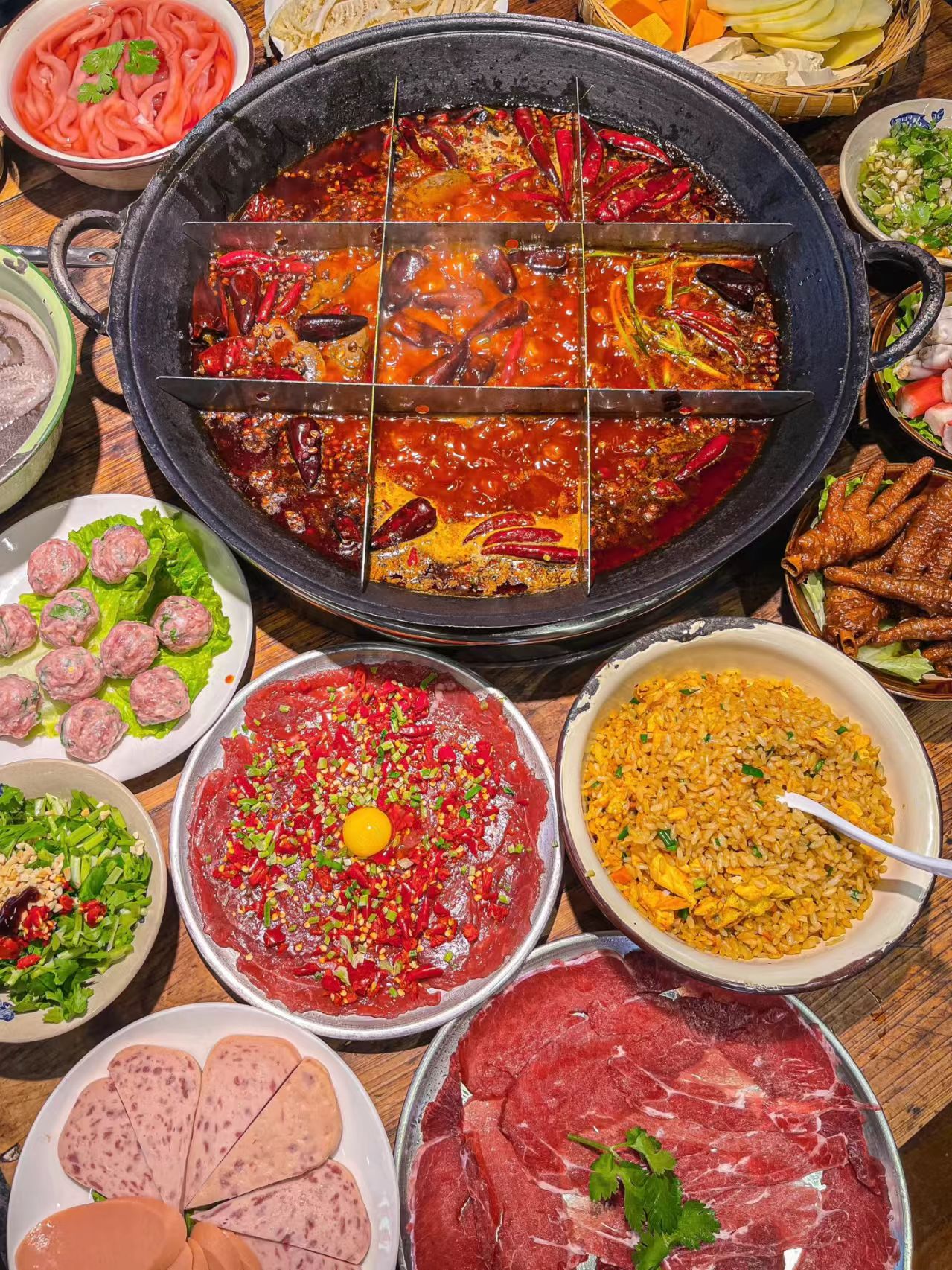
First, separate hotpot as a cooking method from Sichuan’s spicy red-broth hotpot. People have cooked together around heated pots for centuries, but the exact birthplace of the Sichuan mala style is disputed. Accounts commonly name three places: boatmen stopping at Xiaomi Shoal near Luzhou, salt workers in Zigong, and labourers around Chongqing’s river ports. A Sichuan provincial local-history feature considers the Luzhou account plausible; a paper in Forum on Chinese Culture argues for Zigong; Chongqing histories emphasize the port-side development of beef-offal hotpot. The evidence does not support presenting one of these accounts as a settled fact.
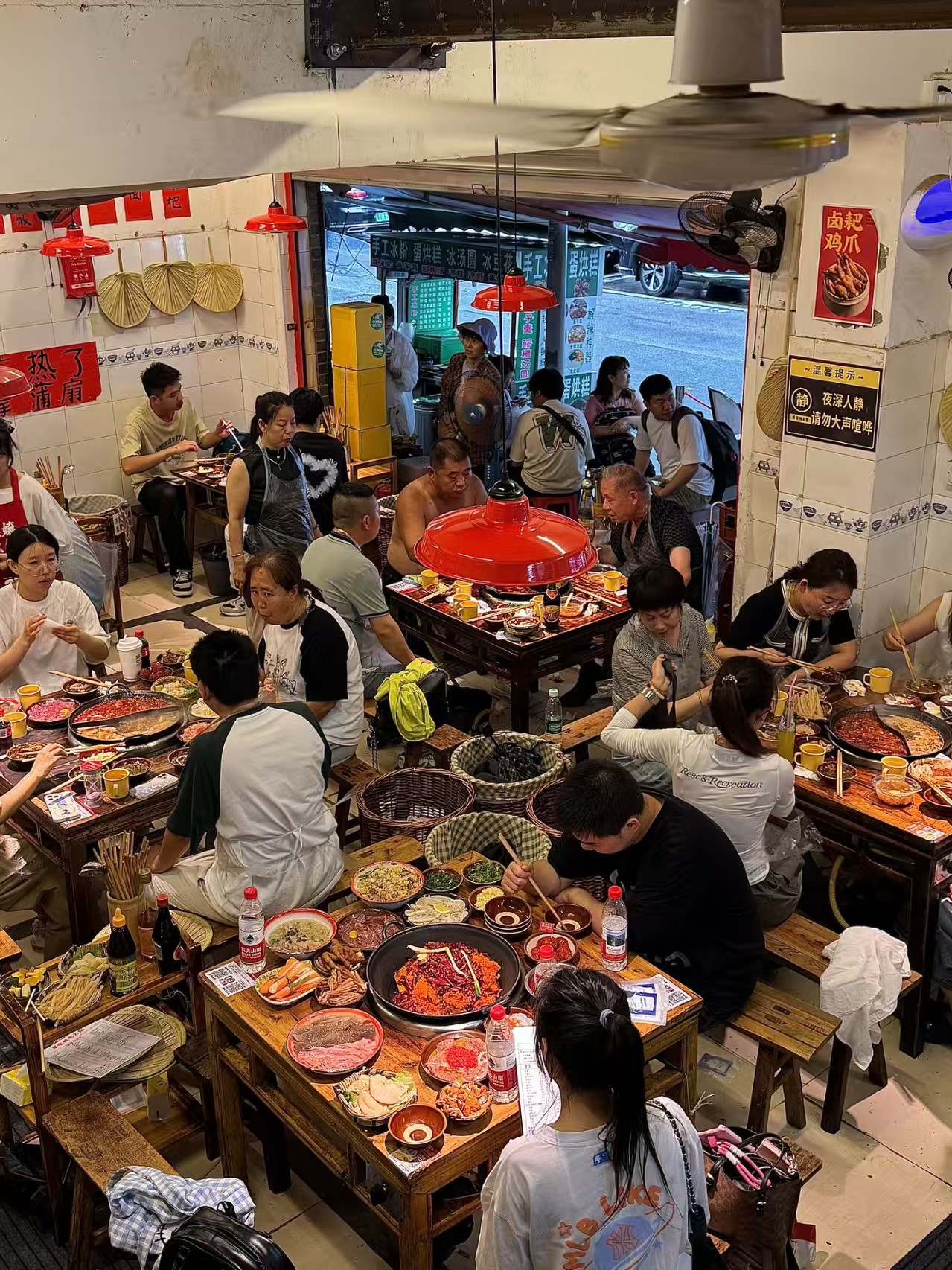
What the accounts have in common is a practical food culture: workers cooked affordable vegetables or offal in a shared pot over a simple fire. Chongqing’s street stalls made beef-offal mala hotpot especially visible, and fixed shops helped spread that form. One Sichuan local-history chronology dates Chongqing’s first fixed hotpot shop to 1932 and hotpot’s arrival in Chengdu to 1946, where cooks adapted it to local tastes. Treat these as dates in one published account, not a definitive timeline: Chengdu also has its own documented traditional hotpot craft, and the regional styles continued to influence one another. In Chengdu, hotpot became a social occasion for any mood: as locals say, “Happy? Eat hotpot. Unhappy? Eat hotpot.” Family gatherings, reunions with friends and company dinners can all centre on one pot, and many residents return to small community hotpot shops.
Two people is enough
Three to six diners can try more ingredients, but hotpot does not require a large party.
Allow a long evening
Ordering, cooking, dipping and talking make this slower than noodles or maocai.
A divided pot can manage chilli
Choose red broth plus mushroom, tomato or another non-spicy broth when the group has different heat tolerances. It does not isolate allergens.
Chengdu and Chongqing: a difference that keeps changing
A local Chengdu memory distinguishes an older rapeseed-oil tendency in Chengdu from Chongqing’s stronger association with beef tallow. Today, many Chengdu red broths also use beef tallow, and restaurant-to-restaurant variation may be greater than a simple city label. Chengdu diners may describe their style as balancing numbing and hot sensations, while Chongqing can feel more directly hot—but these are tendencies, not rules.
A more traditional Chongqing oil dip often begins with sesame oil and garlic. In Chengdu, diners may add scallion, coriander, fish mint (折耳根/鱼腥草, Houttuynia cordata), fresh chilli or oyster sauce according to preference. Modern condiment bars blur this difference; oyster sauce can also be a shellfish-allergy risk.
What goes into the pot?
Beef tripe, valued for a crisp texture.
Duck or goose intestine.
A major blood vessel from a pig or cow—not a throat.
Thinly sliced kidney.
These foods are optional, not a test of courage. If you do not eat offal, choose beef, pork ribs, quail eggs, tofu products, mushrooms and vegetables. Sūròu (酥肉) is a fried pork snack—easy to understand as a relative of fried chicken in format, but usually made from fatty and lean pork.
Small neighbourhood shops may have no English menu and may not explain cooking times, meat cuts or allergens without being asked. This is an accessibility difference, not a judgement of food quality.
07 · CHUANCHUAN · 串串香
Hotpot flavour with a different history of price and access
To a first-time visitor, chuanchuan (串串香) can look almost identical to hotpot (火锅): a spicy broth, similar dipping oil and many of the same ingredients. The bamboo skewer changed the economics. Accounts of 1980s Chengdu describe mobile and street-side sellers near schools, cinemas, shops and neighbourhoods. Small pieces were counted by the skewer, letting students, workers and passers-by buy as little or as much as they could afford.
A Chengdu resident’s childhood memory matches that history: chuanchuan was a roadside, pay-by-the-stick food that satisfied the desire for hotpot flavours without the group size or total cost of a full hotpot meal. Today, some polished chuanchuan restaurants cost as much as hotpot or use weight and set menus, so the old pricing model is cultural history—not a promise about the bill.
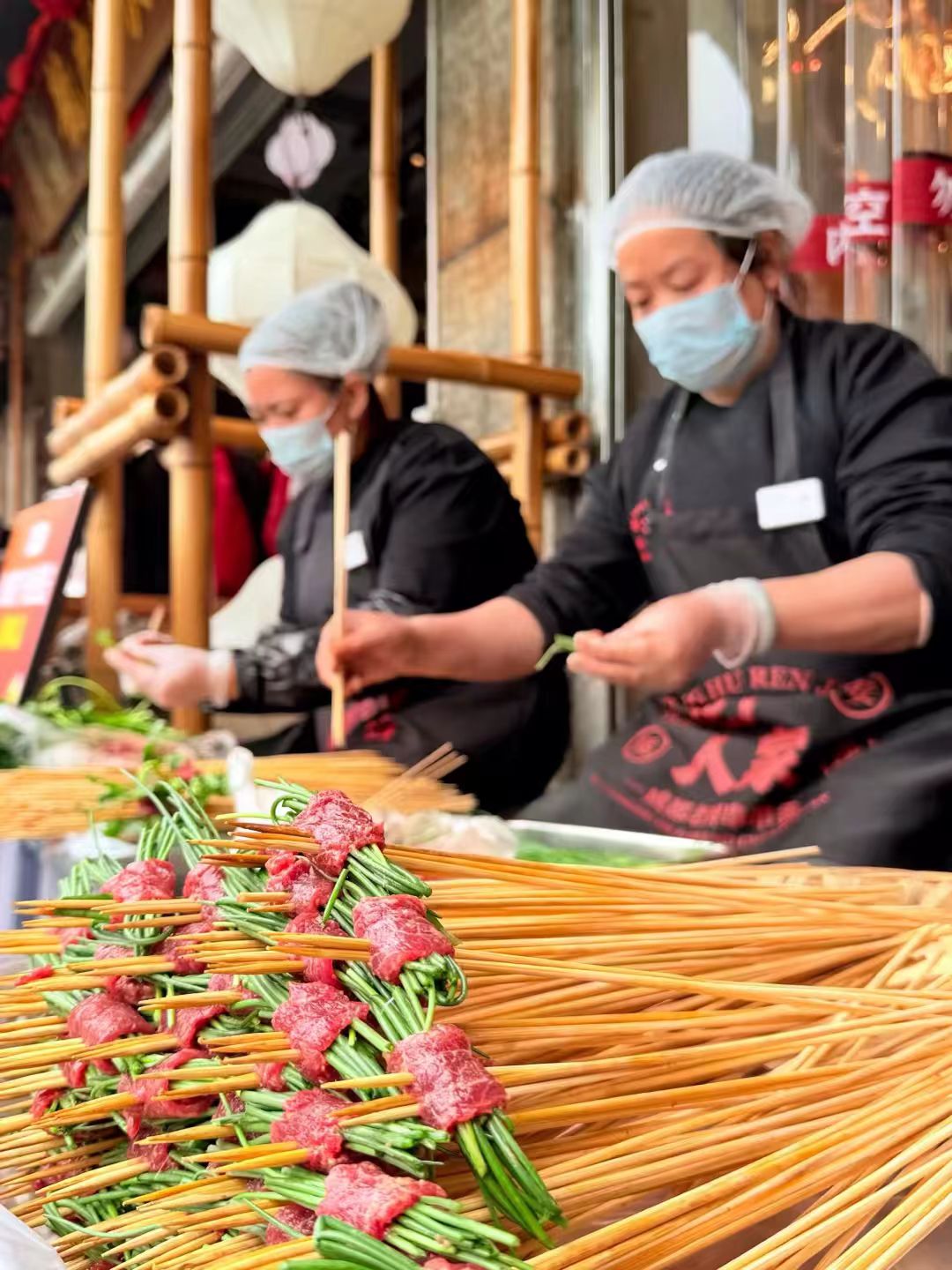
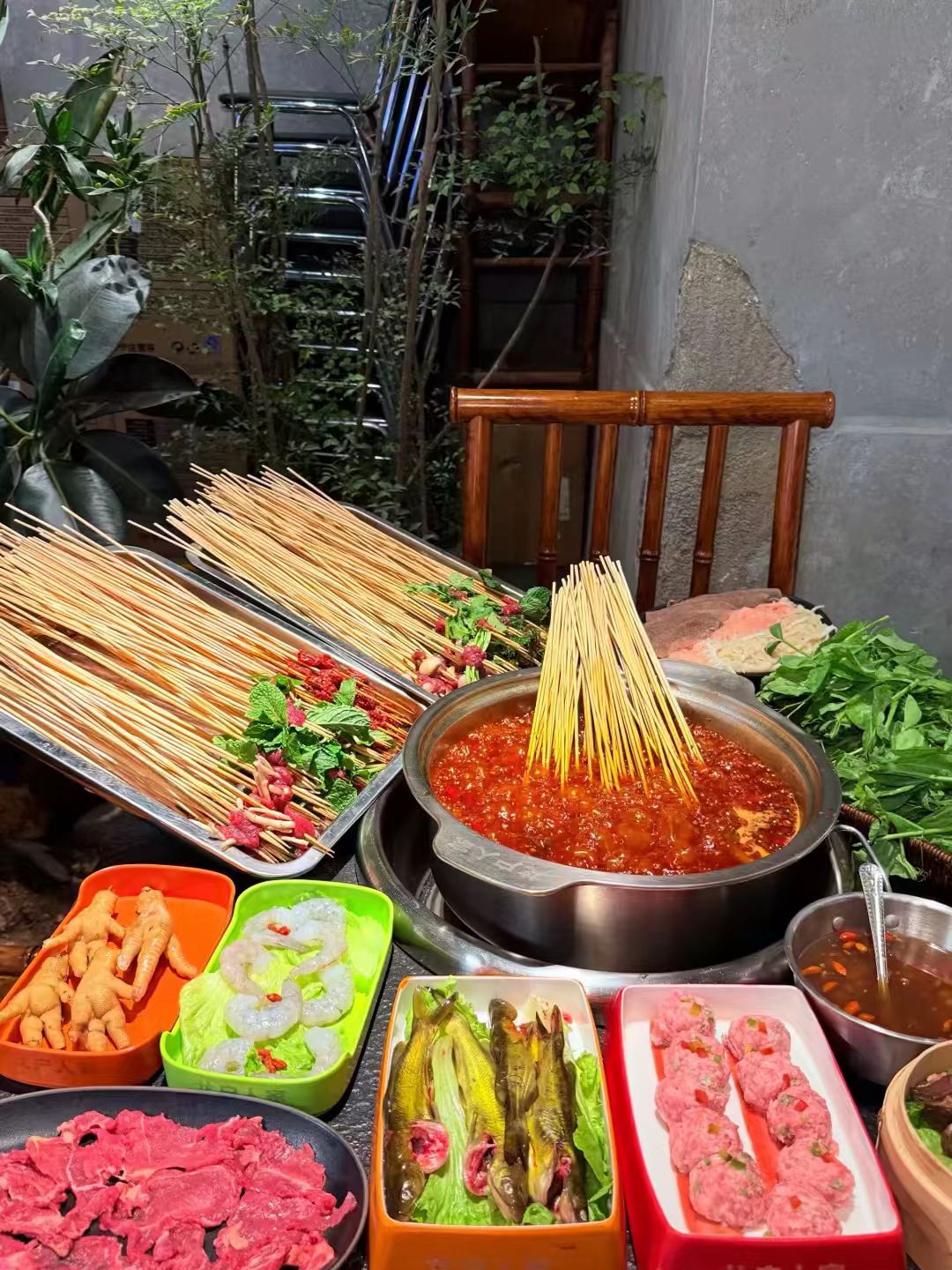
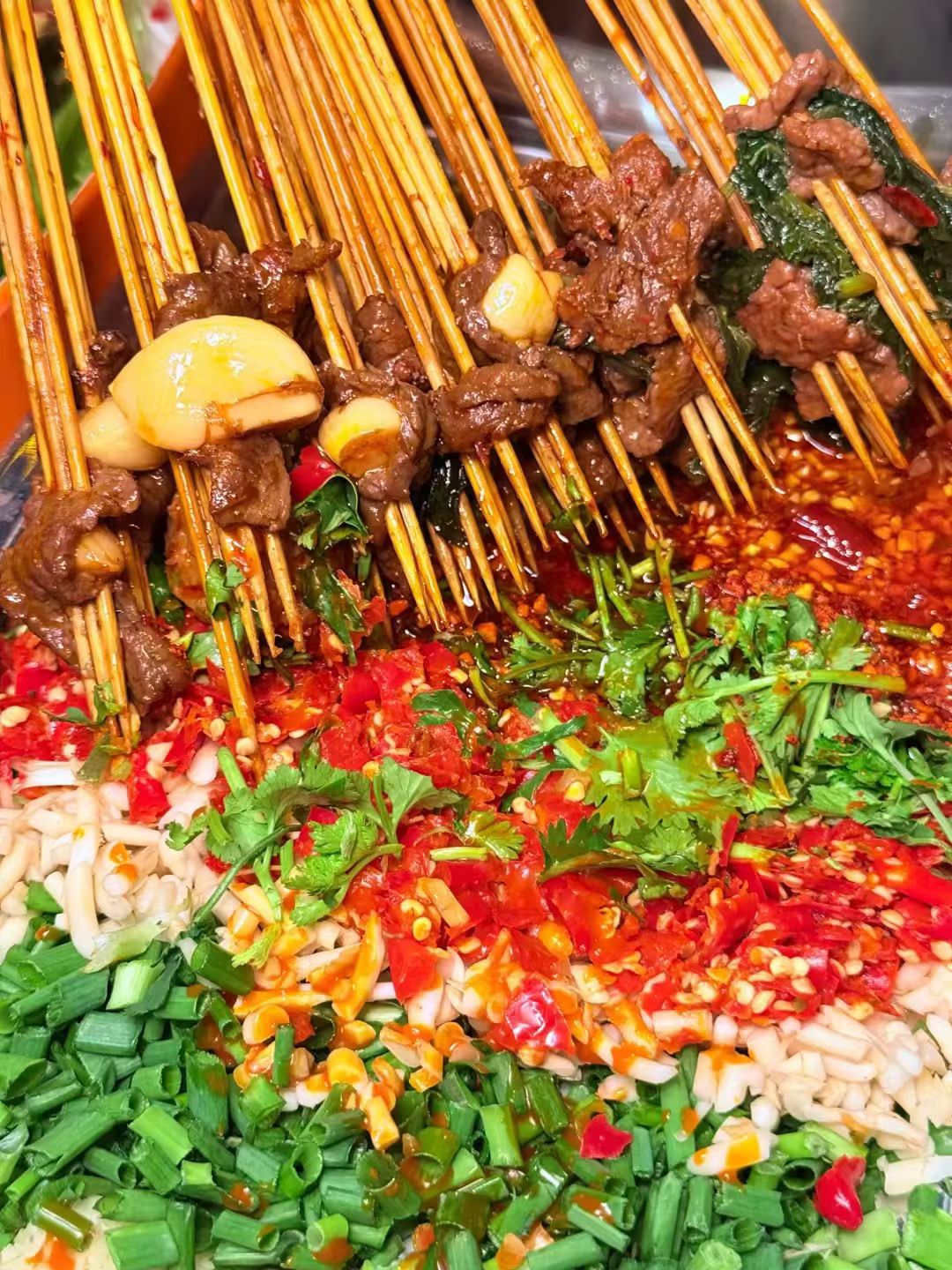
Chuanchuan can suit a first visit because you choose how much to eat one skewer at a time, and one person can often enjoy it alone. Broth fees, minimum orders and current prices vary by shop.
Beef, pork ribs, potato, lotus root, tofu products and vegetables can be more central to a first chuanchuan meal than the offal story associated with classic hotpot. Offal is still available. As a scale analogy only: hotpot is the Pro Max, chuanchuan the Pro and maocai the standard model—related flavours, but different portions, operation and social setting.
08 · DISHES THAT EXPLAIN THE CUISINE
Use familiar names as doors into Sichuan food
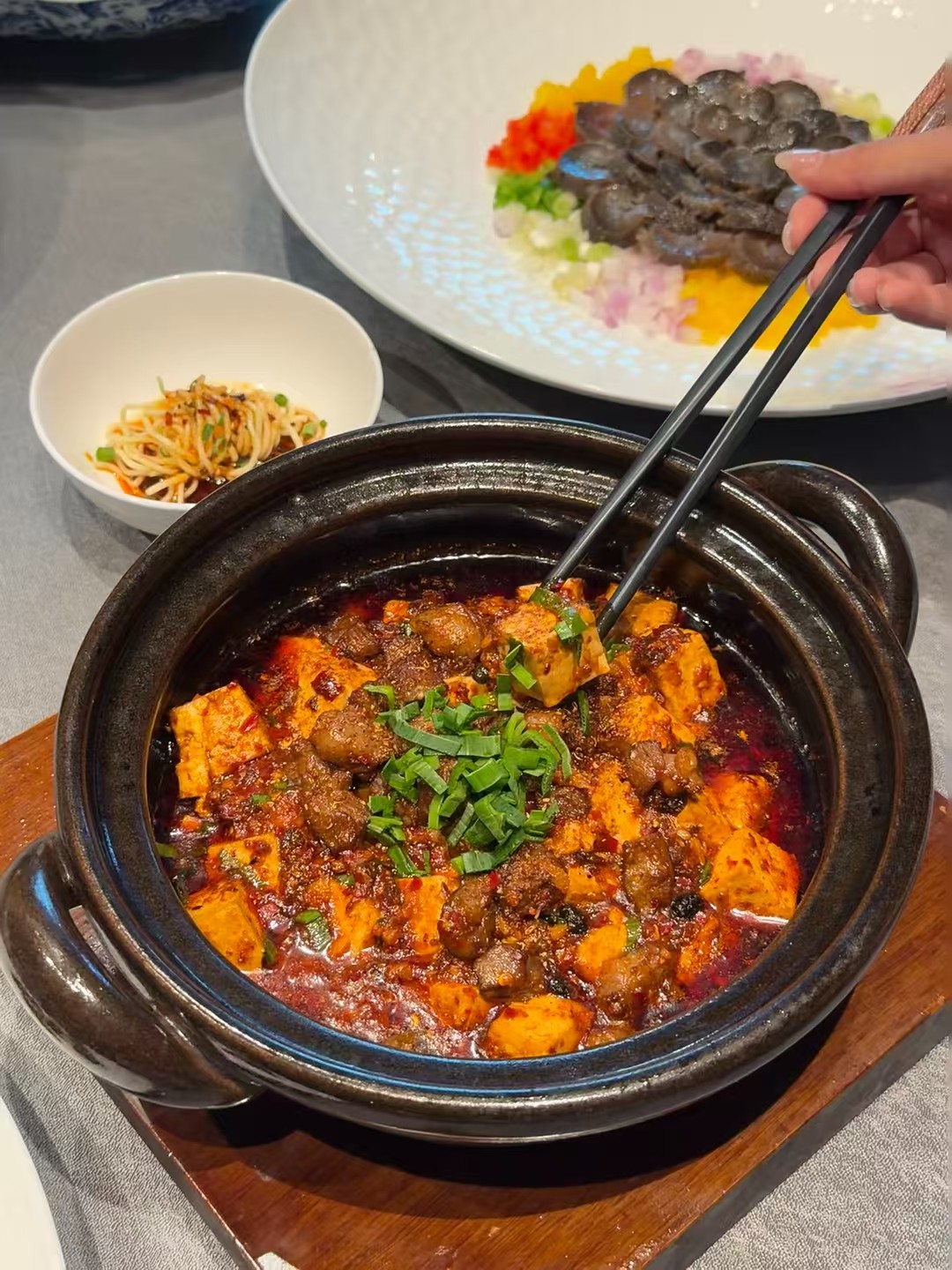
Mapo tofu · 麻婆豆腐
The documented brand tradition links mapo tofu (麻婆豆腐) to a small nineteenth-century restaurant near Chengdu’s Wanfu Bridge that served labourers. Soft tofu, crisp minced meat, Sichuan pepper, chilli and fermented seasonings create layers of texture and aroma. Traditional versions commonly contain meat; tofu does not make the dish vegetarian. Allergens: soy is certain, and sauces may involve wheat.
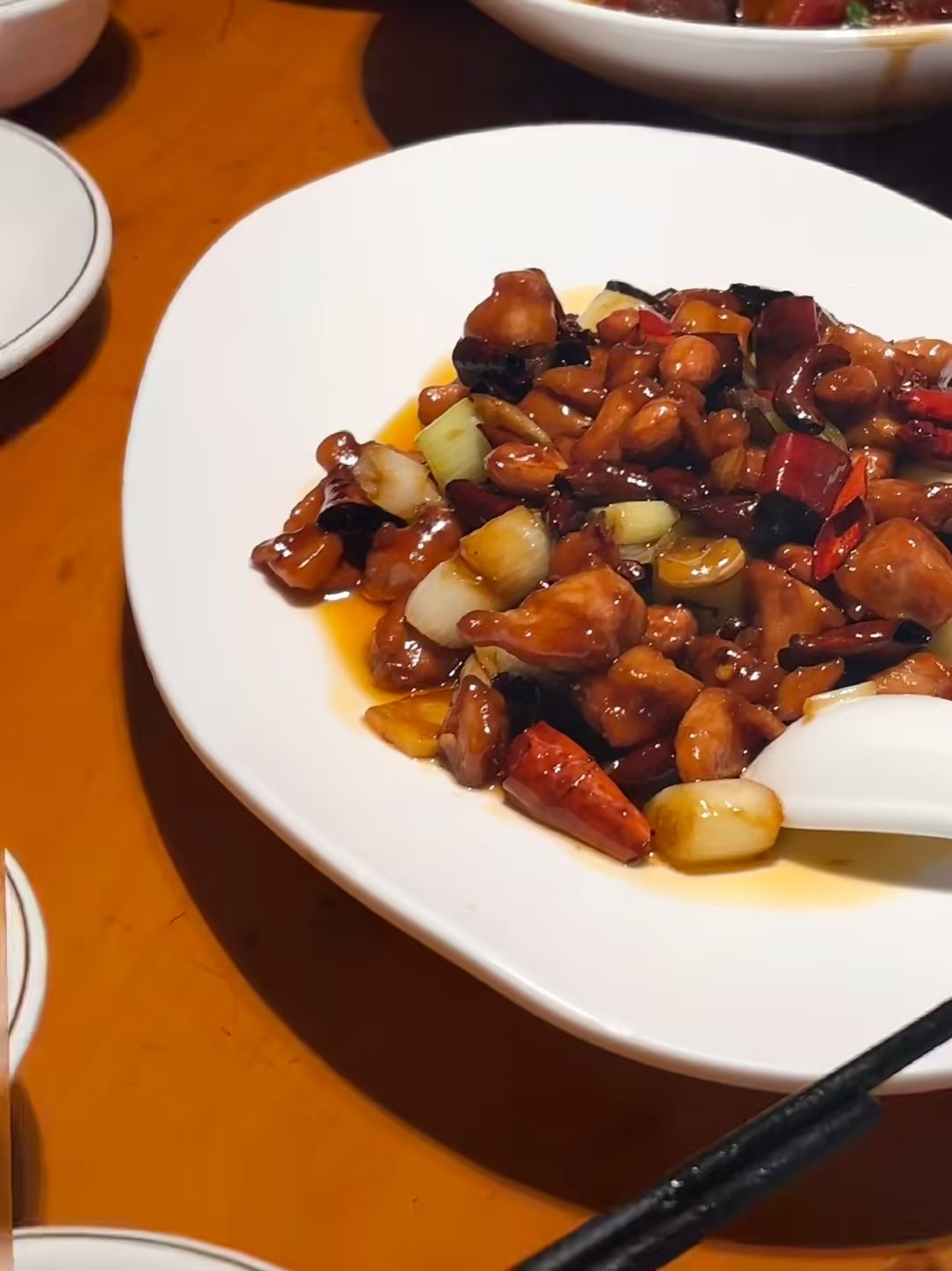
Kung pao chicken · 宫保鸡丁
Kung pao chicken (宫保鸡丁), with chicken, chilli and a sweet-sour-savoury sauce, is a useful introduction to balance rather than maximum heat. Many international visitors know American Chinese dishes such as General Tso’s chicken (左宗棠鸡); it belongs to a later Chinese-American restaurant tradition, while kung pao chicken is a Sichuan classic. The two are sometimes compared, but they are not the same dish. Allergens: peanuts are central; soy and wheat may appear in sauces.
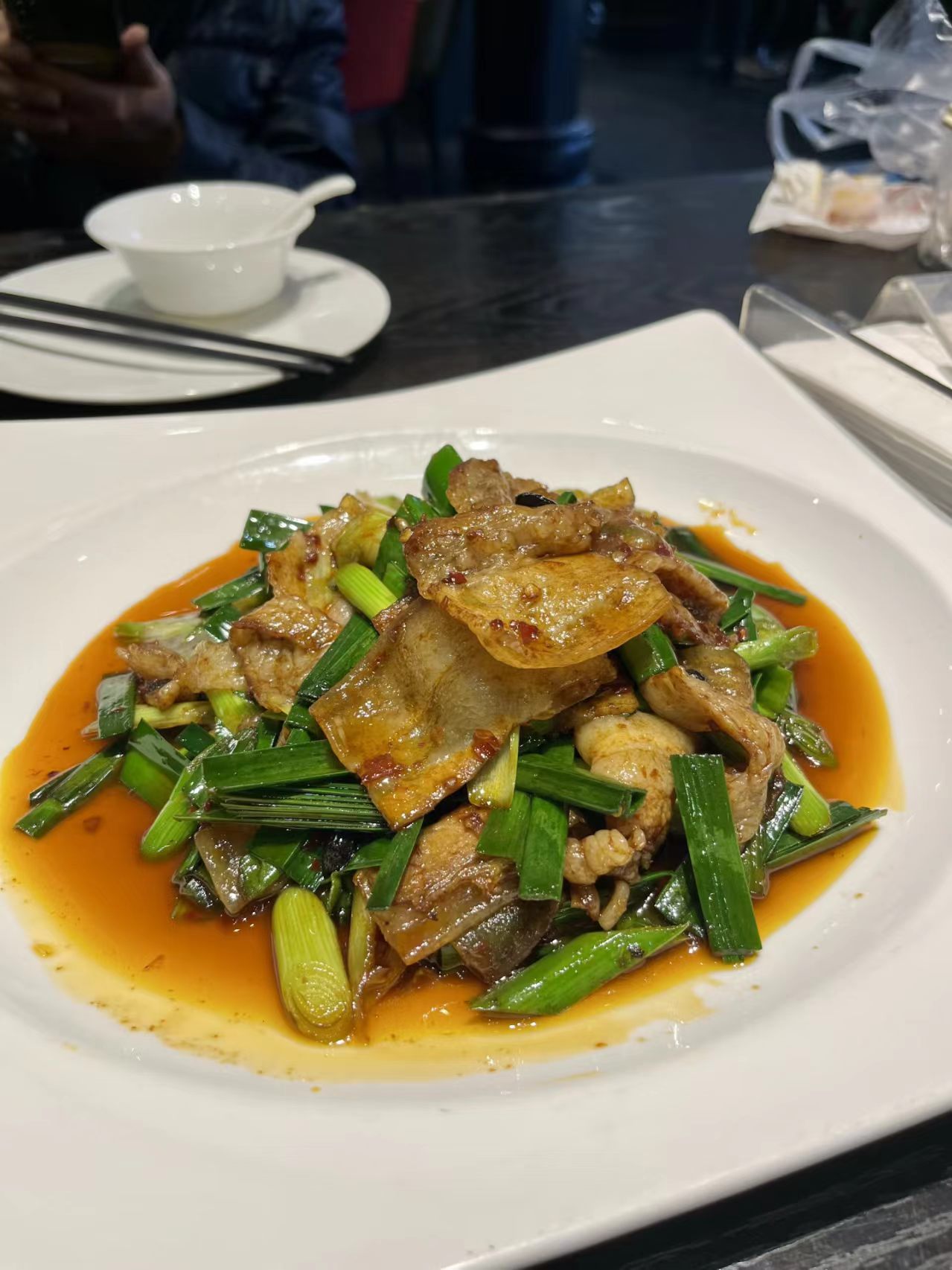
Twice-cooked pork · 回锅肉
Twice-cooked pork (回锅肉), made with pork, vegetables and fermented seasonings, is a rich, rice-friendly dish that represents a home-style side of Sichuan cooking. It is not suitable for people avoiding pork or following halal dietary rules. Allergens: compound sauces may involve soy and wheat.
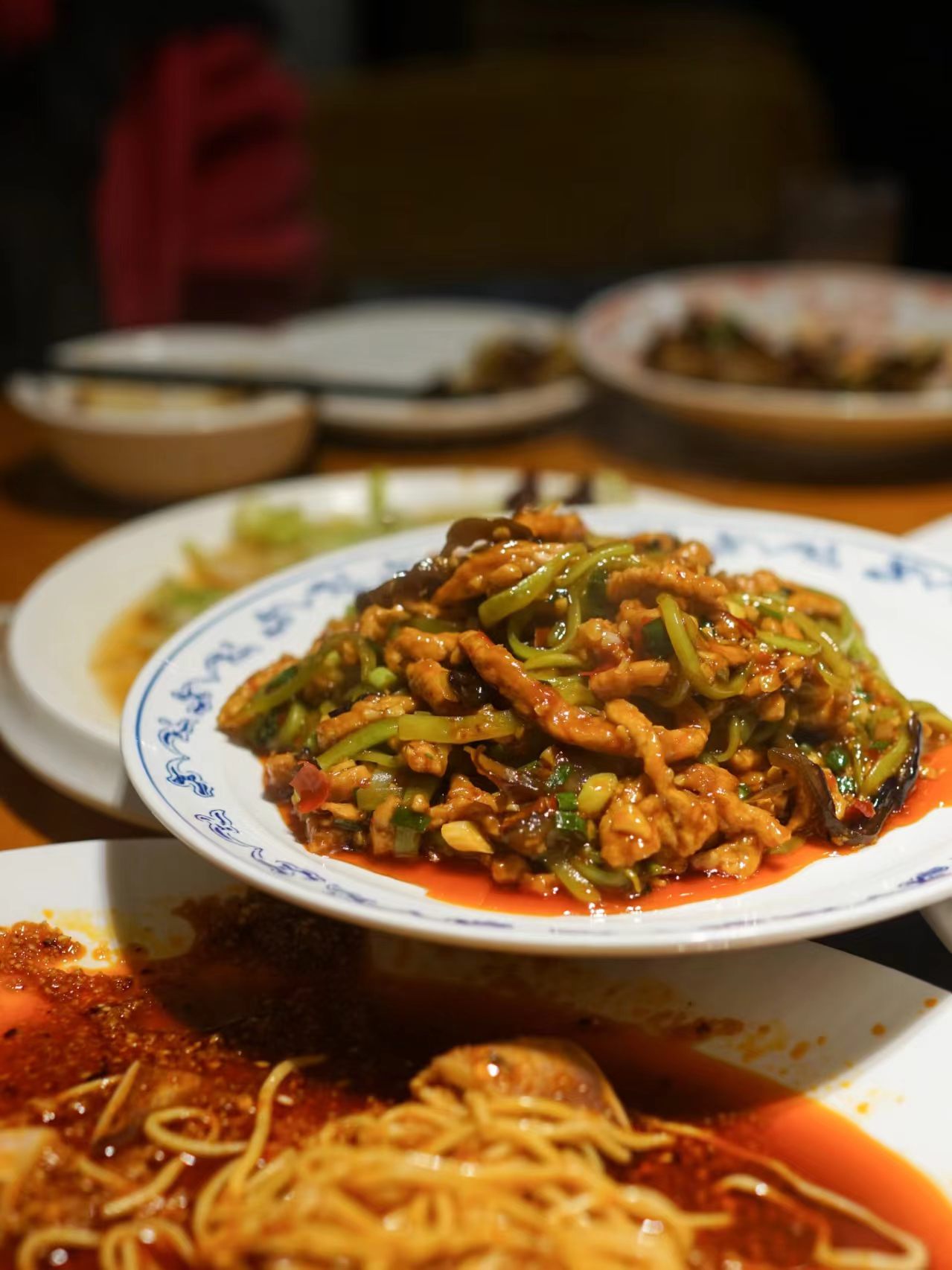
Fish-fragrant dishes · 鱼香类
“Fish-fragrant” (鱼香) names a flavour profile commonly built from pickled chilli, ginger, garlic, scallion, sugar, vinegar and soy sauce. The main ingredient may be aubergine or pork rather than fish; this photo shows fish-fragrant shredded pork (鱼香肉丝). “Usually no fish” is not an allergy guarantee: recipes, oyster sauce, stock and shared cookware still need checking.
Two shared dishes with rice—or one main dish plus a vegetable or tofu dish—are usually a better starting point than ordering every famous name. For three or four diners, add a cold dish and one or two hot dishes, then order more only if needed.
09 · EVERYDAY NOODLES AND SMALL EATS
Choose by food type, not by one “must-eat” list
This part of Chengdu food makes more sense in three groups: noodle-shop staples and dumplings; maocai (冒菜) as a cooked-to-order bowl; and snacks or sweets eaten between meals or alongside other food. The categories explain what each dish does in everyday eating, rather than treating everything as the same kind of “quick meal.”
Noodles and dumplings 面食与面点
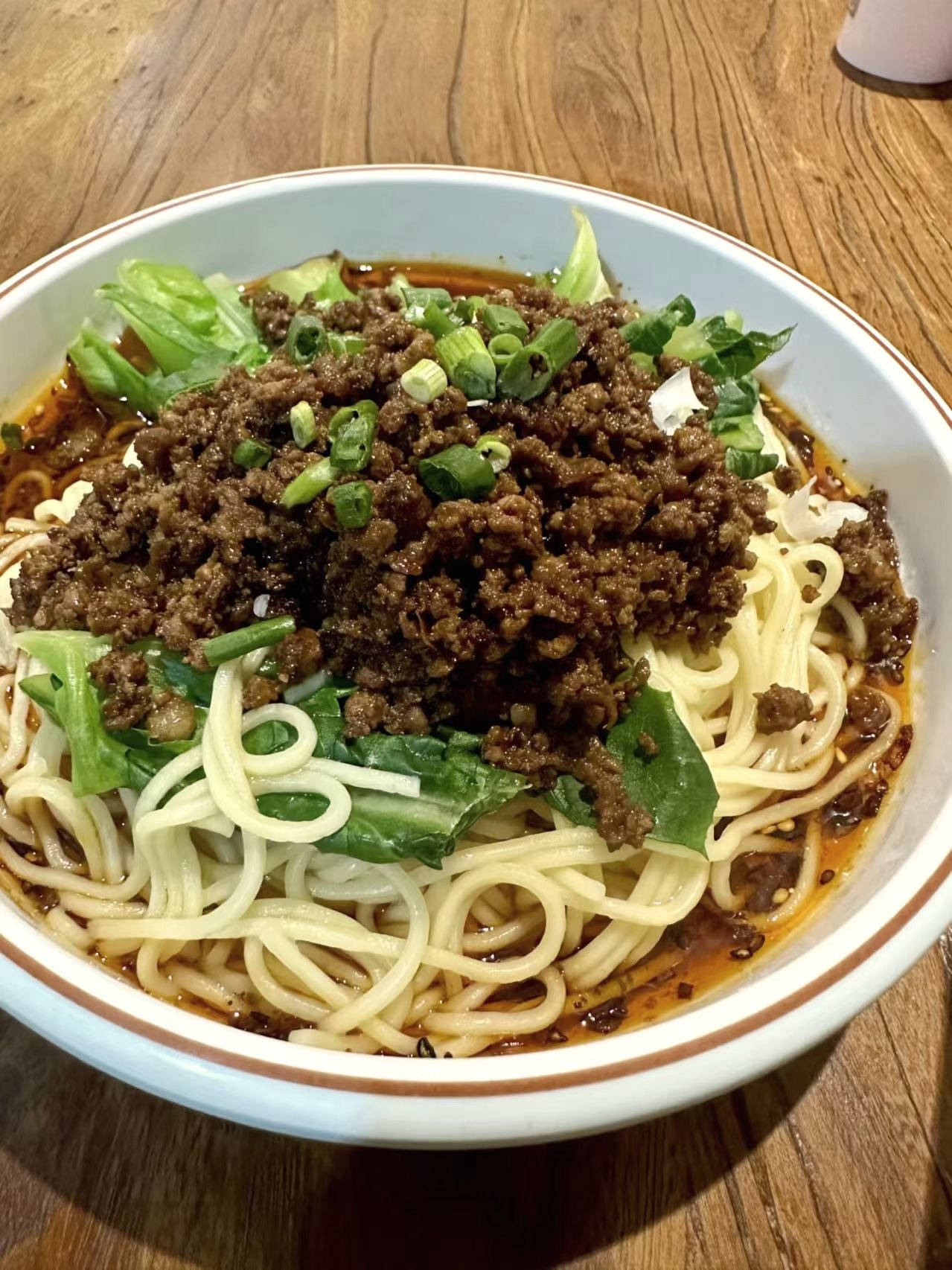
From the carrying pole to the noodle shop
The widely told origin story of dan dan noodles (担担面) begins with Chen Baobao (陈包包), who sold noodles from a shoulder pole in Zigong in 1841; dan (担) refers to that pole. After the style reached Chengdu, versions with minced meat, preserved vegetables and chilli oil developed. Sujiao zajiang mian (素椒杂酱面), pictured here, belongs to the later noodle-shop tradition: dry noodles are mixed with chilli oil and Sichuan pepper, then topped with fried minced-pork zajiang (杂酱). Despite su (素) in the name, it is normally not vegetarian. Allergens and restrictions: wheat is expected; pork, soy, sesame and peanuts vary by shop.
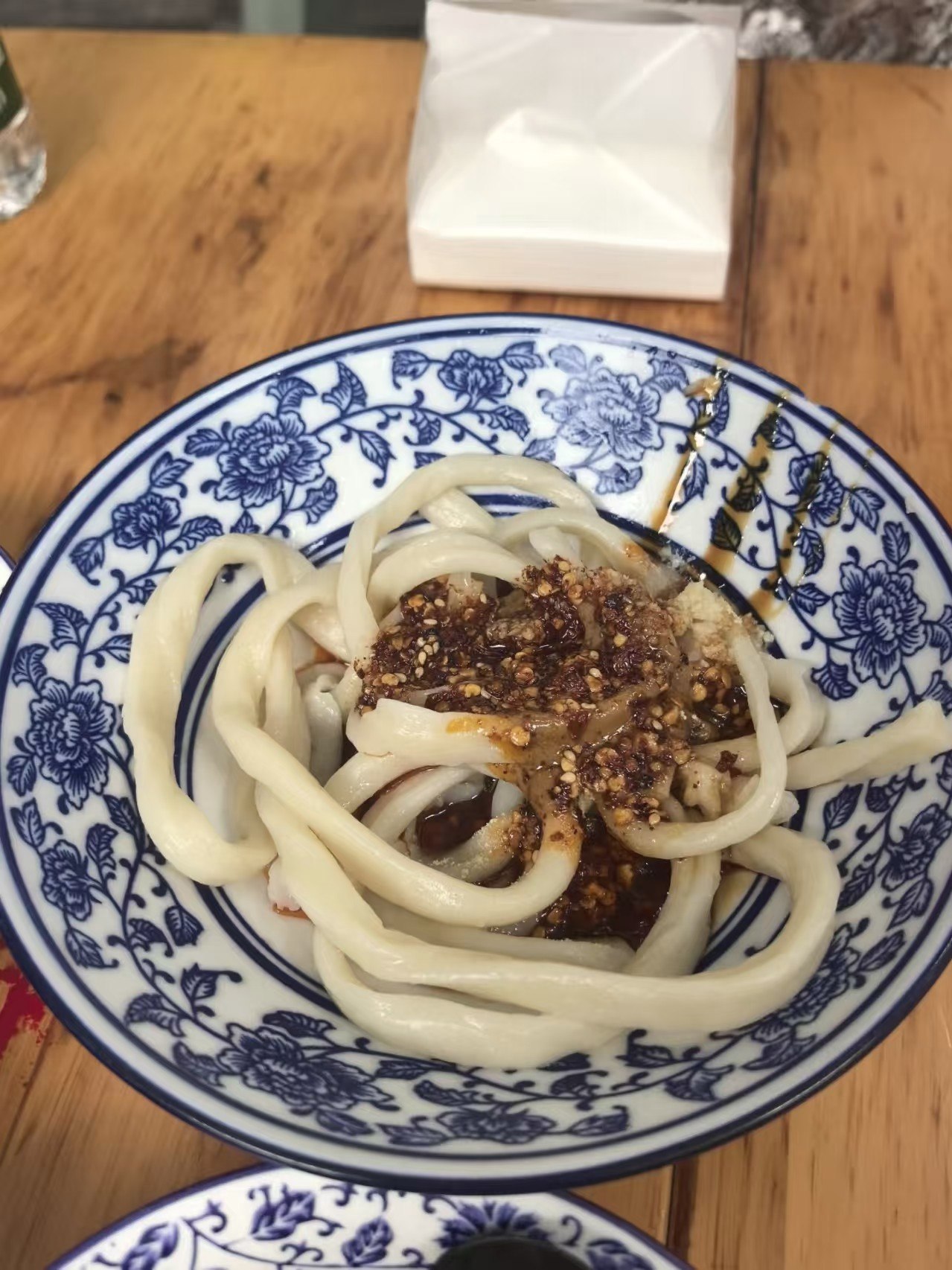
Thick noodles where sweet meets chilli
Tian shui mian (甜水面) uses unusually thick, chewy wheat noodles with a concentrated dressing of sweetened soy sauce, chilli oil, garlic and often sesame. The name means “sweet-water noodles,” but this is a savoury noodle snack with sweetness inside a compound seasoning, not a dessert. Allergens: wheat is expected; soy and sesame are common, and recipes vary.
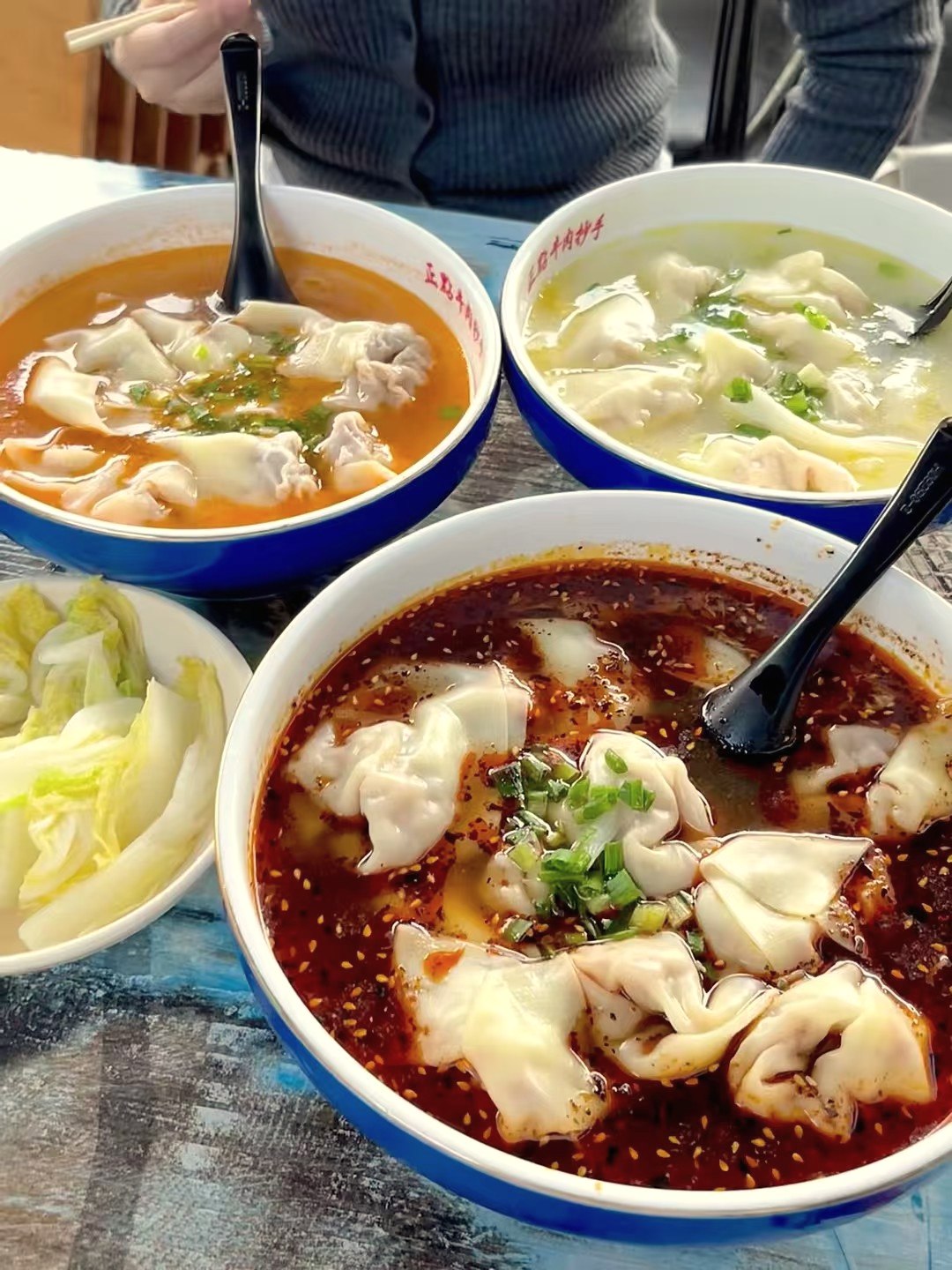
Sichuan wontons in broth or red oil
Chaoshou (抄手) are Sichuan wontons made with thin square wheat wrappers folded around a filling, commonly pork. Clear-broth chaoshou are gentle and soup-led; hongyou chaoshou (红油抄手) arrive in a chilli-oil seasoning and taste very different. The English word “dumpling” is broad, so the Chinese name is useful when ordering. Allergens: wheat and pork are common; broth and seasoning may contain soy, sesame or other ingredients.
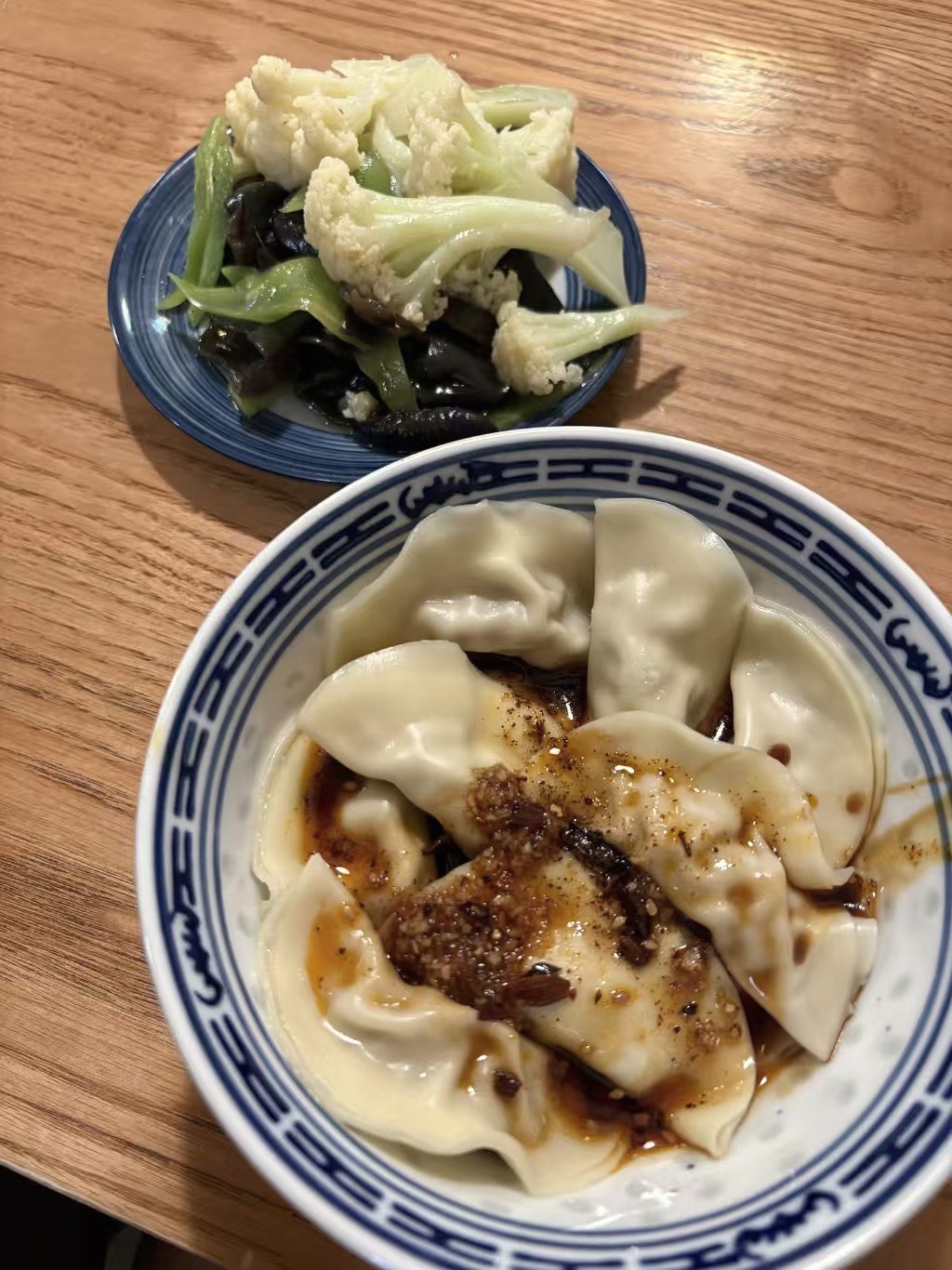
Crescent-shaped jiaozi, separate from chaoshou
Shuijiao (水饺) are boiled jiaozi: round wrappers are folded into crescent-shaped dumplings, unlike the square wonton wrappers used for chaoshou (抄手). They may be served plain or dressed with seasoning; the photograph shows a Chengdu red-oil style. Allergens and restrictions: wheat is expected; fillings commonly contain pork and may include egg, soy or sesame.
A cooked-to-order bowl 一人一碗
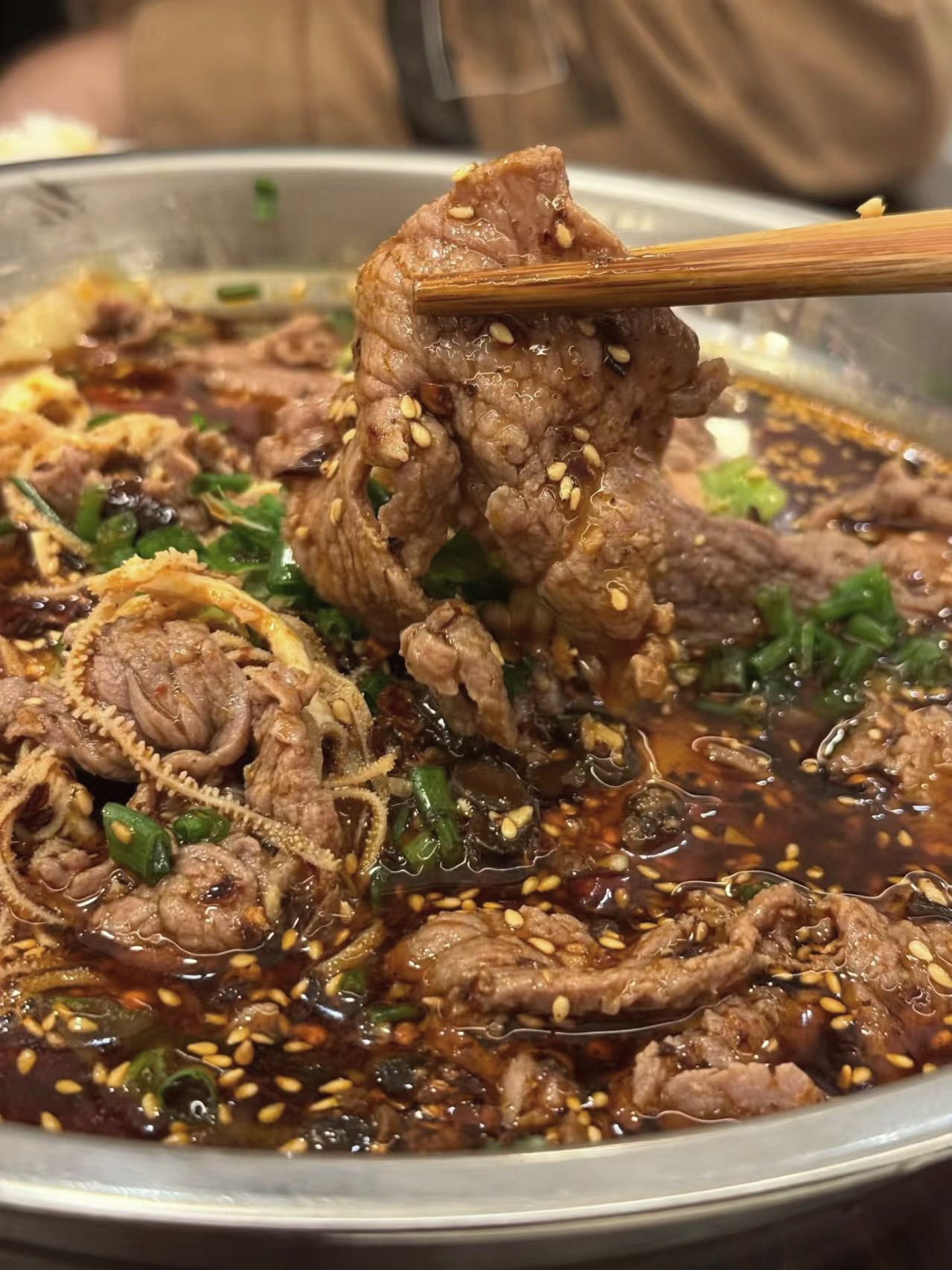
Hotpot logic, cooked in the kitchen
For maocai (冒菜), you choose meat, vegetables, mushrooms and tofu products; the kitchen cooks the selection together in a seasoned broth and serves it as one bowl. It carries some of the flavour logic of hotpot without a pot to manage at the table, which makes it practical for one person. It is still a full savoury meal rather than a street snack. Allergens: broth, sauces and shared cooking equipment can contain or contact soy, wheat, sesame, peanuts, meat or shellfish.
Chengdu snacks and sweets 成都小吃与甜品
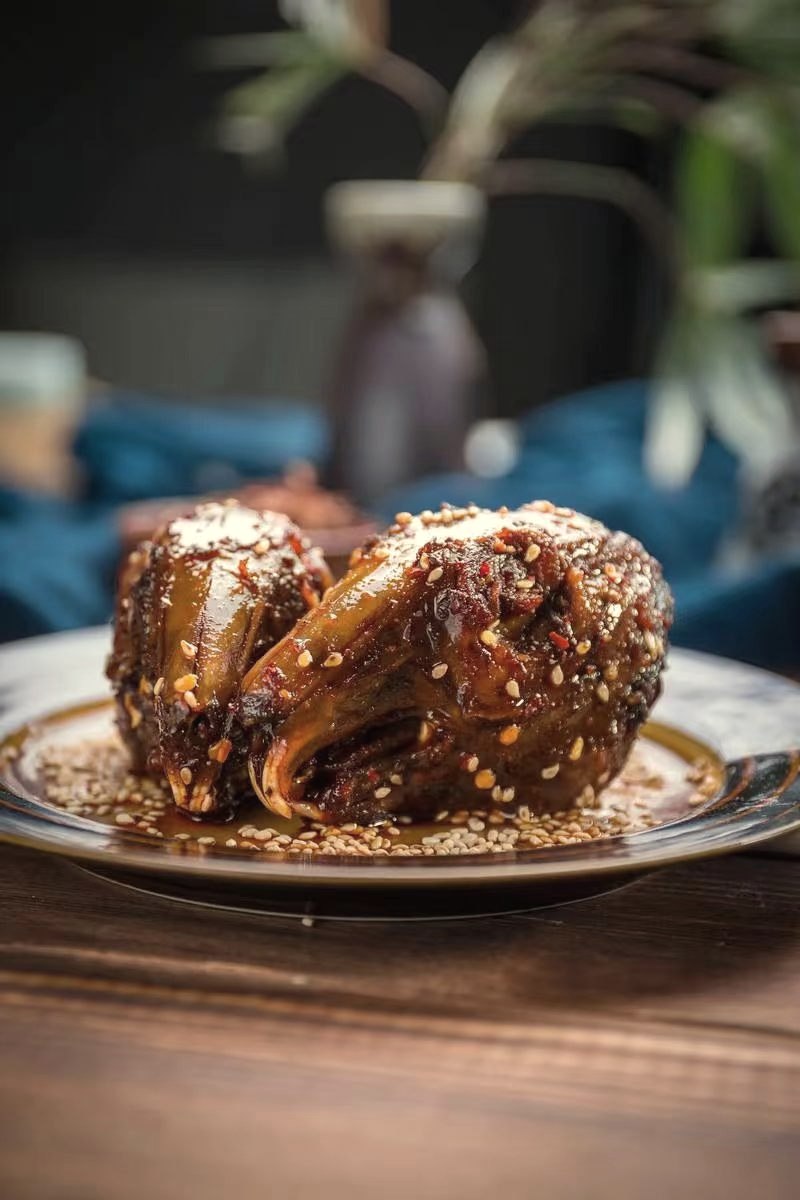
A small eat defined by the eating ritual
Rabbit head (兔头) is a Chengdu small eat, not a complete meal and not tied to one time of day. It is braised with spices and may be finished with chilli oil and Sichuan pepper. Diners pull it apart by hand and work carefully around the small bones; the slow, hands-on process is part of the experience. Allergens and restrictions: contains rabbit; sesame, peanuts, soy or wheat may appear in the seasoning.
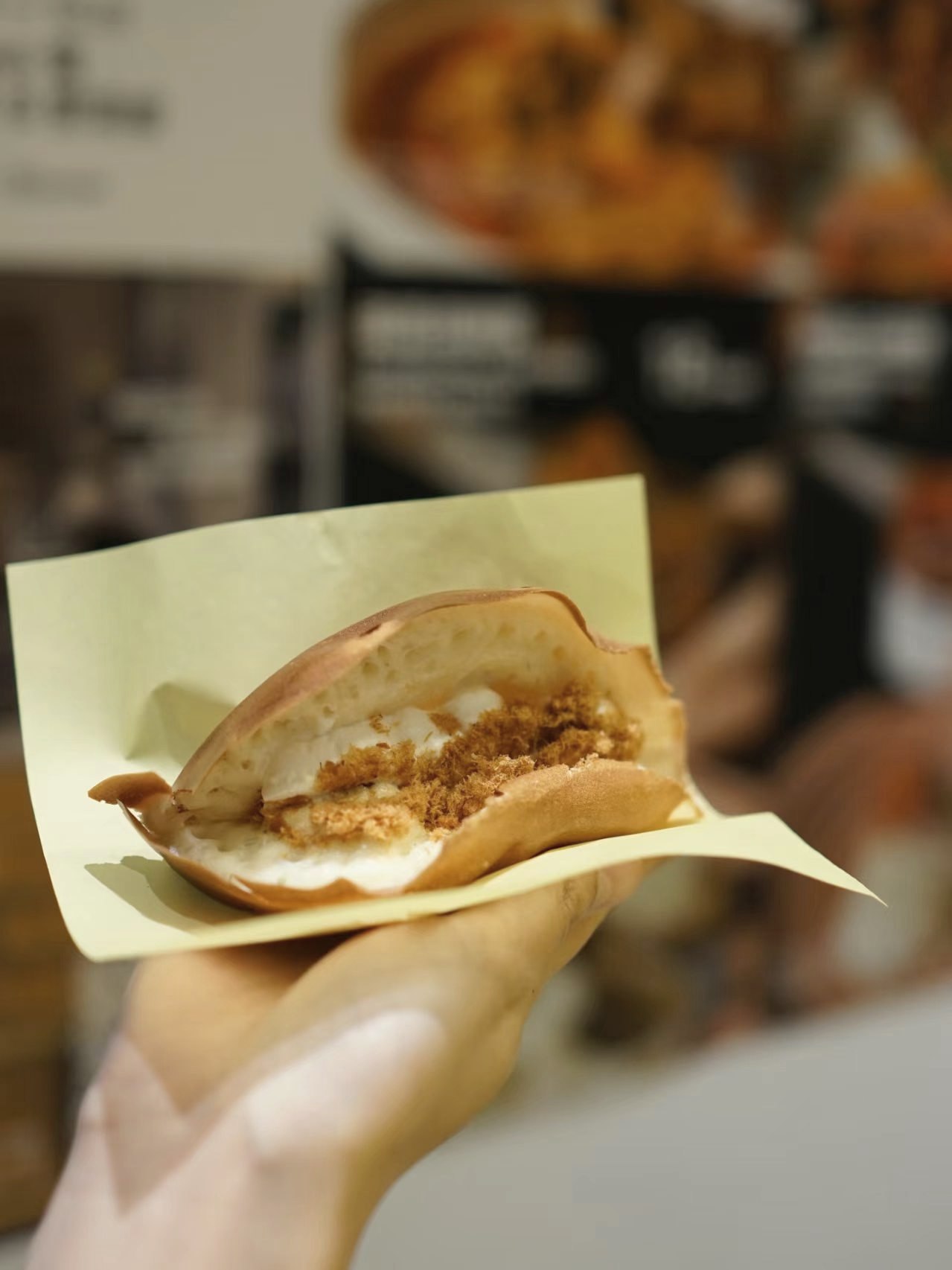
A folded griddle cake that can be sweet or savoury
Dan hong gao (蛋烘糕) is a small Chengdu snack: egg-and-flour batter is cooked in a shallow pan, filled and folded while warm. Cream, red bean and sesame-sugar fillings make sweet versions; pork floss, pickled vegetables or other fillings make savoury ones. Its identity comes from the soft cake and made-to-order filling, so it should not be described only as dessert. Allergens: wheat and egg are expected; milk, sesame, peanuts or pork depend on the filling.
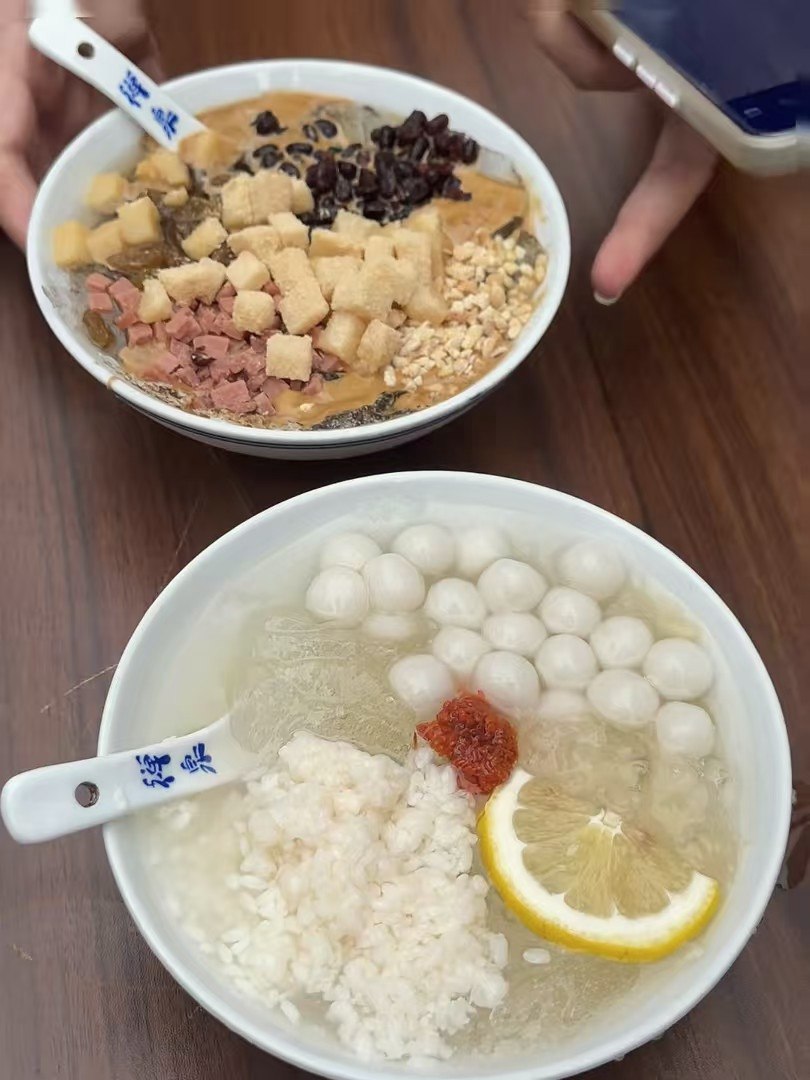
A cooling jelly with a flexible topping culture
Bing fen (冰粉) is a soft, translucent chilled jelly usually served with brown-sugar syrup. Modern bowls may add fruit, fermented rice, small rice balls, raisins, peanuts or sesame, so two shops can look very different. It is commonly chosen as a cooling sweet after strongly seasoned food. Allergens: the plain jelly is not the whole story; check every topping and shared utensil, especially for peanuts, sesame and other nuts.
How the categories fit into a day
- BreakfastNoodles, chaoshou or shuijiao can make a straightforward local breakfast; the nearest good neighbourhood shop is often more useful than crossing the city for one famous name.
- LunchMaocai works as a self-contained bowl for one person, while two or more diners can compare several shared Sichuan dishes.
- AfternoonDan hong gao is a warm made-to-order snack; bing fen is a chilled sweet that can cool the palate after a strongly seasoned meal.
- DinnerChoose shared dishes, hotpot or chuanchuan according to group size and time. Rabbit head can be one small item within the meal, but it is not a complete dinner by itself.
These groups describe the food’s usual role rather than a fixed eating schedule. A noodle bowl can be breakfast or lunch, rabbit head can be eaten as a small snack or as part of a larger meal, and sweet snacks appear throughout the day. None of them is a test of whether a visitor has eaten “authentically.”
10 · USEFUL ORDERING LANGUAGE
Show it, say it or play it aloud
Use the large Chinese line as a display card, follow the pinyin if you want to say it yourself, or tap Listen to play Mandarin pronunciation with your device’s voice.
这个菜本身辣吗?
Zhège cài běnshēn là ma?Is this dish normally spicy before adjustment?不要辣,可以吗?
Bú yào là, kěyǐ ma?Can this be made without chilli?少放花椒。
Shǎo fàng huājiāo.Please use less Sichuan pepper.这是猪肉、牛肉还是鸡肉?
Zhè shì zhūròu, niúròu háishì jīròu?Is this pork, beef or chicken?里面有内脏吗?
Lǐmiàn yǒu nèizàng ma?Does this contain offal?汤底是用肉熬的吗?
Tāngdǐ shì yòng ròu áo de ma?Is the broth made with meat?11 · FAQ
Questions first-time visitors ask about Chengdu food
Is all Chengdu food very spicy?
No. Sichuan cuisine has many flavour profiles. Order several cooked dishes if you want to compare hot, numbing, savoury, sweet-sour, fermented and relatively mild flavours in the same meal.
Can two people eat hotpot?
Yes. Hotpot is not reserved for large groups. Two people can share a pot; three to six people simply make it easier to order a wider variety without waste.
Should a first-time visitor order a divided hotpot?
It is a practical choice when people at the table have different chilli tolerances. Local groups often prefer a full red broth, while a divided pot is common when hosting visitors or eating with children, older relatives or someone who cannot eat chilli. It is not allergen isolation.
Can I eat chuanchuan alone?
Yes. Small skewered portions let you control how much you take. Check the broth fee, minimum order and whether the shop charges by skewer, weight or set menu.
Is mapo tofu vegetarian?
Do not assume so. Traditional versions commonly contain minced meat, and the sauce, stock and cooking equipment also need checking.
Is fish-fragrant aubergine made with fish?
The name describes a flavour profile, and many versions contain no fish as a main ingredient. That is not an allergy guarantee: ask about fish-based seasoning, oyster sauce, stock and shared cookware.
SOURCES · CHECKED NOVEMBER 10, 2026
Background used for this cultural guide
- China Intangible Cultural Heritage · Sichuan culinary techniquesIngredients, preservation, compound seasoning, historical development and national heritage status.
- UNESCO Creative Cities Network · ChengduChengdu’s membership in the gastronomy field since 2010.
- Ministry of Commerce heritage-brand museum · Chen Mapo TofuThe brand’s documented Chengdu story and traditional craft.
- Fangzhi Sichuan · The origins and development of Sichuan–Chongqing hotpotSummarizes the Luzhou, Zigong and Chongqing origin accounts; proposes Xiaomi Shoal near Luzhou as plausible and gives one chronology for hotpot’s introduction to Chengdu.
- Forum on Chinese Culture · Analysis of the origin of Sichuan mala hotpotA 2010 scholarly paper arguing for Zigong salt fields as the origin; included to show that the birthplace remains disputed.
- Chongqing Local Chronicles · Chongqing hotpotA local account linking mala beef-offal hotpot with river-port workers, shared cooking and offal.
- Chengdu Intangible Cultural Heritage Protection Centre · Chengdu hotpot traditional craftA documented Chengdu hotpot craft lineage, listed as a municipal intangible cultural heritage representative project in 2024.
- Chengdu chuanchuan history featureAccounts of mobile stalls, school gates, skewers and the development of the format from the 1980s.
- Chengdu Release · The changing meaning of dan dan noodlesDan dan noodles as an older street-vending form; the relationship between Chengdu dan dan noodles, sujiao noodles and sujiao zajiang noodles.
- MICHELIN Guide · The roots of dan dan noodlesThe Chen Baobao origin story, shoulder-pole vending and later Chengdu versions with minced meat.
- MICHELIN Guide · Dumplings around the worldThe English distinction between boiled jiaozi (水饺) and wontons made with square wrappers, used here to separate shuijiao from chaoshou.
- The Paper · Chengdu noodle-shop cultureSujiao zajiang mian as a common local benchmark and the range of pork-rib, beef, intestine and other saozi toppings.
- China News · Chengdu rabbit headA report on one Chengdu shop’s spice-braised rabbit heads and chilli-oil dressing; recipes vary between shops.
- U.S. FDA · Major food allergensCommon allergen categories used in the safety overview.
- UK Food Standards Agency · Allergy-safe meal preparationCross-contact and kitchen communication principles.
- NHS · Food allergyMedical distinction between allergy and intolerance and the importance of an emergency plan.
Restaurant recipes, service, prices and ingredient sourcing vary. Ask the individual restaurant; local experience in this guide describes common patterns, not guarantees.
RELATED GUIDES